Table of Contents
- 1. Introduction: The AI Revolution in Healthcare
- 2. Diagnostic Support Systems
- 3. Medical Imaging and AI
- 4. Drug Discovery and Development
- 5. Personalized Medicine
- 6. Robotic Surgery
- 7. Remote Patient Monitoring
- 8. Global AI Healthcare Landscape
- 9. Ethics and Regulatory Considerations
- 10. The Future of AI in Healthcare
- 11. Frequently Asked Questions
Introduction: The AI Revolution in Healthcare
Artificial intelligence is reshaping the healthcare industry at an unprecedented pace. From early disease detection to personalized treatment plans, from drug discovery to robotic surgery, AI is permeating every corner of modern medicine. By 2026, the global healthcare AI market is projected to exceed $45 billion, a clear indicator of how seriously the industry is embracing this transformative technology.
The World Health Organization (WHO) has acknowledged AI's potential to reduce health service inequalities while simultaneously emphasizing the importance of responsible deployment. Machine learning, deep learning, natural language processing, and computer vision represent the AI subdisciplines driving revolutionary innovations in medical applications worldwide.
Key Statistic
The global healthcare AI market grew from $6.9 billion in 2020 to a projected $45 billion by 2026, representing a compound annual growth rate (CAGR) of approximately 44%.
In this comprehensive guide, we explore how artificial intelligence is transforming healthcare across its full spectrum -- from diagnostic support systems and medical imaging to drug discovery, personalized medicine, robotic surgery, and remote patient monitoring. We will also examine the ethical considerations, regulatory landscape, and what the future holds for AI-powered healthcare.
Diagnostic Support Systems
Clinical decision support systems (CDSS) represent one of the most widespread and impactful applications of AI in healthcare. These systems analyze patient data to assist physicians during the diagnostic process, offering suggestions about potential conditions and guiding clinical reasoning.
Symptom Analysis and Preliminary Diagnosis
Modern AI-based diagnostic support systems integrate patients' symptoms, medical history, laboratory results, and genetic data to deliver comprehensive analyses. IBM Watson Health, Google DeepMind, and Microsoft's healthcare AI solutions are pioneers in this space, processing millions of data points to identify patterns that human clinicians might miss.
Deep learning algorithms extract patterns from millions of patient records, contributing to the detection of even rare diseases. An AI system can simultaneously evaluate hundreds of different variables, uncovering correlations that escape human observation. This capability proves especially critical for rare conditions, patients with multiple comorbidities, and emergency situations where time-sensitive decisions can mean the difference between life and death.
AI in Pathology
Digital pathology is one of the fastest-growing medical AI application areas. AI algorithms analyze biopsy samples at a microscopic level, detecting cancer cells, signs of infection, and tissue abnormalities with remarkable precision. Companies like PathAI and Paige.AI are developing solutions that reduce pathologists' workload while simultaneously increasing diagnostic accuracy. In 2021, Paige received the first FDA approval for an AI-based pathology system for prostate cancer detection.
| Diagnostic Area | AI Accuracy | Human Accuracy |
|---|---|---|
| Skin Cancer Detection | 95.5% | 86.6% |
| Lung Cancer Screening | 94.4% | 88.0% |
| Diabetic Retinopathy | 97.1% | 91.0% |
| Breast Cancer Screening | 92.5% | 88.4% |
Medical Imaging and AI
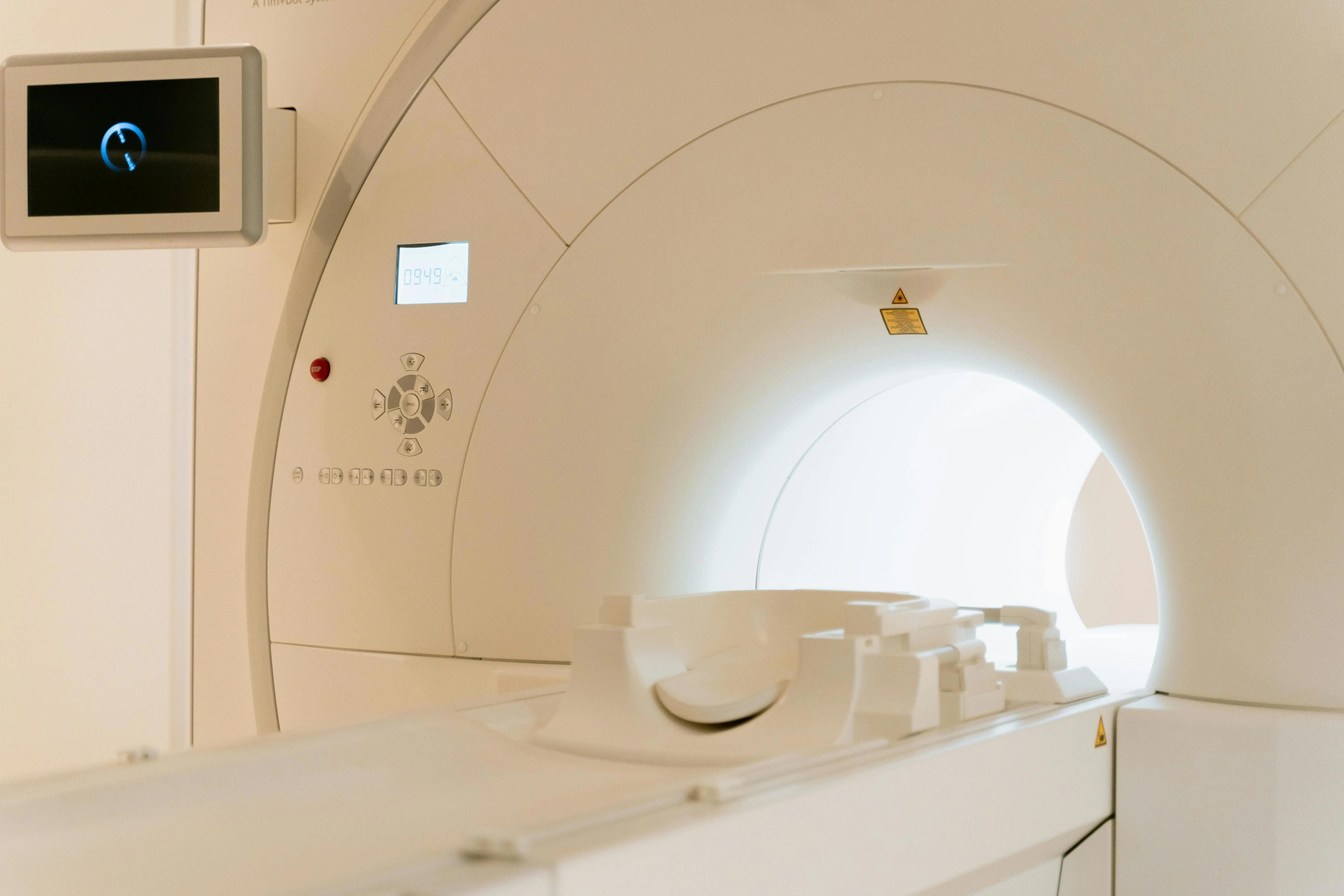
Medical imaging stands as one of the most successful applications of artificial intelligence in healthcare. AI-powered analysis of X-rays, MRI scans, CT (computed tomography), ultrasound, and mammography images accelerates the diagnostic process and enhances radiologists' accuracy significantly.
Deep Learning in Radiology
Convolutional neural networks (CNNs) have revolutionized the medical imaging field. Trained on millions of labeled images, these networks can automatically detect tumors, fractures, infections, and other pathological findings with remarkable precision. Google's LYNA (Lymph Node Assistant) system can detect lymph node metastases with 99% accuracy, outperforming experienced pathologists.
AI-powered imaging systems make the greatest difference in emergency department settings. By detecting brain hemorrhages, pneumothorax, and large vessel occlusions within seconds, they help prioritize critical cases for immediate attention. The Viz.ai platform has reduced treatment initiation time for large vessel occlusion cases by an average of 52 minutes, directly impacting patient outcomes and survival rates.
AI in Ophthalmology
Eye disease diagnosis has seen tremendous progress through AI integration. The FDA-approved IDx-DR system is the first AI device capable of autonomously diagnosing diabetic retinopathy. This system analyzes retinal scan images to detect the condition without requiring a specialist physician's interpretation. Similarly, AI systems are being deployed for early detection of glaucoma, macular degeneration, and retinal vein occlusion, potentially preventing blindness in millions of patients.
Important Note
AI in medical imaging is designed to support radiologists' decision-making process, not replace them. The best results are consistently achieved in hybrid models where AI and expert physicians work together collaboratively.
Drug Discovery and Development
Traditional drug development takes an average of 10-15 years and costs approximately $2.6 billion. Artificial intelligence has the potential to dramatically shorten this timeline and reduce costs significantly. AI-powered drug discovery is revolutionizing molecular modeling, target identification, clinical trial design, and side-effect prediction.
Molecular Modeling and Virtual Screening
DeepMind's AlphaFold system broke new ground in protein structure prediction. By accurately predicting the 3D structure of proteins, this system enables a much deeper understanding of drug targets. Companies like Atomwise, Insilico Medicine, and Recursion Pharmaceuticals can screen billions of molecules in virtual environments to identify promising drug candidates in a fraction of the time traditional methods require.
Generative AI models can now design entirely novel molecular structures from scratch. This "de novo drug design" approach enables the development of innovative treatments that work through mechanisms different from existing drugs. Insilico Medicine achieved a landmark by advancing an AI-discovered drug molecule to clinical trials in just 18 months, setting a new industry benchmark for speed and efficiency.
Clinical Trial Optimization
AI plays a critical role in the design and execution of clinical trials. Machine learning is being deployed for patient selection, dosage optimization, side-effect monitoring, and data analysis. Unlearn.AI uses "digital twin" technology to reduce the need for control groups, enabling trials to be completed faster and more ethically while maintaining scientific rigor.
Personalized Medicine
Personalized medicine (precision medicine) aims to create customized treatment plans based on each patient's genetic makeup, lifestyle, and environmental factors. Artificial intelligence serves as the most powerful tool for achieving this ambitious goal, processing vast amounts of multi-dimensional data to tailor treatments to individual patients.
Genomics and AI
The human genome contains more than 3 billion base pairs, making analysis of this massive dataset extremely challenging with traditional methods. AI algorithms can rapidly process genomic data to predict genetic mutations, disease risks, and treatment responses. Companies like Tempus and Foundation Medicine analyze cancer patients' tumor genomes to identify the most appropriate treatment options, transforming oncology from a one-size-fits-all approach to truly individualized care.
In pharmacogenomics, AI can predict how individuals will respond to specific medications. This allows clinicians to avoid ineffective treatments, minimize side effects, and increase treatment success rates. For example, genomic AI analysis in antidepressant selection can reduce the time to find the right medication from months to weeks, sparing patients from prolonged suffering and adverse effects.
Personalized Treatment in Oncology
Personalized approaches in cancer treatment are becoming increasingly widespread. AI systems evaluate the tumor's genetic profile, the patient's overall health status, and available treatment options to recommend optimal therapy plans. These systems can identify specific mutations that make tumors susceptible to targeted therapies, match patients with appropriate clinical trials, and predict treatment outcomes with increasing accuracy.
Robotic Surgery
Robotic surgery represents the most tangible application of artificial intelligence brought into the operating room. The Da Vinci Surgical System, with more than 6,700 units worldwide, is the most widely used surgical robot. With AI integration, these systems are becoming increasingly intelligent, offering enhanced precision and safety.
AI-Powered Surgical Planning
Pre-operative AI analysis assists surgeons by creating detailed 3D anatomy models for operation planning. These models display the exact location of tumors, the structure of surrounding tissues, and the routes of critical blood vessels, minimizing surgical risks. Companies like Surgical Theater and Medivis combine augmented reality (AR) with AI to provide surgeons with real-time navigation during procedures, overlaying critical information directly onto the surgical field.
While autonomous surgical robots are still in early stages, the STAR (Smart Tissue Autonomous Robot) system developed at Johns Hopkins University has demonstrated the ability to suture intestinal tissues with greater precision than human surgeons. These developments indicate that AI's role in surgery will continue to grow substantially in the coming years.
Minimally Invasive Surgery and AI
In laparoscopic and endoscopic surgeries, AI performs real-time image analysis to distinguish tissue types, mark critical structures, and assess complication risk. This creates an invaluable safety net, particularly for less experienced surgeons. Next-generation surgical robots like Versius and Senhance offer smaller, more accessible, and more cost-effective alternatives that democratize access to robotic-assisted surgery across healthcare systems worldwide.
Remote Patient Monitoring
Wearable technologies and IoT (Internet of Things) devices continuously collect patients' health data, while artificial intelligence analyzes this information to detect abnormalities early. The COVID-19 pandemic dramatically highlighted the importance of remote patient monitoring, accelerating adoption across healthcare systems globally.
Wearable Health Technologies
Smart watches like Apple Watch, Fitbit, and Samsung Galaxy Watch offer health features including heart rhythm monitoring, sleep tracking, oxygen saturation measurement, and fall detection. The Apple Watch's ECG feature can detect atrial fibrillation (AF), alerting users to potential cardiac issues before they become emergencies. AI algorithms analyze this continuous stream of data to catch early signs of heart attack, stroke, and chronic conditions like diabetes.
Continuous glucose monitoring (CGM) systems track diabetic patients' blood sugar in real time. AI-powered insulin pumps predict blood sugar trends and automatically adjust dosage, creating what is often called a closed-loop system. Medtronic's 780G system, nicknamed the "artificial pancreas," represents a revolutionary advance in diabetes management, significantly improving glycemic control and quality of life for patients.
Telemedicine and AI Chatbots
AI-powered health chatbots evaluate patients' symptoms, perform preliminary triage, and direct them to appropriate healthcare services. Platforms like Babylon Health, Ada Health, and Buoy Health provide health consultations to millions of users worldwide. These systems are particularly valuable in regions where access to healthcare services is limited, bridging the gap between patients and medical expertise.
Global AI Healthcare Landscape
The adoption of AI in healthcare varies significantly across regions, driven by factors such as regulatory frameworks, data availability, technological infrastructure, and investment levels. The United States leads in AI healthcare startups and FDA-approved medical AI devices, with over 500 AI-enabled devices cleared by 2025.
China has made healthcare AI a national priority, investing billions in research and deploying AI systems across its vast hospital network. The European Union emphasizes ethical AI development through regulations like the EU AI Act, which classifies medical AI as high-risk and imposes strict requirements for transparency and safety.
Emerging economies are also embracing healthcare AI. India's Niramai uses AI-based thermal imaging for breast cancer screening in rural areas. In Africa, companies like Ubenwa use AI to analyze infant cries for early detection of birth asphyxia. These solutions demonstrate how AI can democratize healthcare access in resource-limited settings, bringing advanced diagnostic capabilities to underserved populations.
Warning
The widespread adoption of AI in healthcare requires addressing critical challenges including data privacy regulations, regulatory frameworks, algorithmic bias, and building a qualified workforce. Without proper safeguards, AI could exacerbate rather than reduce health inequities.
Ethics and Regulatory Considerations
The proliferation of AI in healthcare brings significant ethical and legal questions. Patient data privacy, algorithmic bias, liability distribution, and transparency are among the most debated issues in the sector today.
Data Privacy: Health data is among the most sensitive categories of personal information. Regulations such as GDPR (European Union), HIPAA (United States), and equivalent frameworks globally mandate the protection of this data. Anonymizing the large datasets required for AI training and storing them securely is of critical importance. Differential privacy techniques and synthetic data generation are emerging as solutions to train AI models without exposing individual patient information.
Algorithmic Bias: AI systems can learn and amplify biases present in their training data, potentially producing results that disadvantage certain demographic groups. For instance, if training data predominantly represents a specific ethnic group, diagnostic accuracy may suffer for other populations. This necessitates training with diverse, inclusive datasets and rigorous testing across all demographic groups before deployment.
Liability: When AI makes an incorrect diagnosis, who bears responsibility? The physician, the software developer, the hospital administration, or the AI manufacturer? These questions remain largely unanswered, and legal frameworks around the world are being updated to address the unique challenges posed by AI-assisted medical decision-making.
The Future of AI in Healthcare
The future of AI in healthcare holds tremendously promising developments. Multimodal AI systems that simultaneously process text, images, audio, and genomic data will deliver more comprehensive and accurate diagnoses than ever before. Large language models (LLMs) will analyze medical literature in real time, providing physicians with up-to-date information at the point of care.
Federated learning technology enables patient data to be analyzed locally without being sent to centralized servers, potentially resolving the data privacy dilemma that has slowed AI adoption. As quantum computing matures, drug discovery simulations and protein structure predictions will be performed exponentially faster than today's capabilities allow.
Over the next decade, we can expect AI-powered health assistants available to every individual, a shift toward preventive rather than reactive healthcare, and the detection of diseases before symptoms even appear. This transformation will make healthcare more accessible, more effective, and more personalized than at any point in human history.
| Technology | Current State | 2030 Expectation |
|---|---|---|
| AI Diagnostic Systems | Expert-assisted usage | Autonomous preliminary diagnosis |
| Robotic Surgery | Surgeon-controlled | Semi-autonomous operations |
| Drug Discovery | AI-assisted screening | Fully AI-designed drugs |
| Personalized Medicine | Oncology-focused | Widespread across all specialties |
Frequently Asked Questions
Will AI replace doctors?
No, AI is designed to support physicians in their diagnostic and treatment processes, not replace them. AI excels at analyzing large datasets, pattern recognition, and automating repetitive tasks. However, it cannot replicate human qualities like empathy, nuanced clinical reasoning, and patient communication. The most successful healthcare model of the future will be a collaborative one where AI and physicians work together, each contributing their unique strengths.
How reliable is AI in healthcare?
The reliability of AI systems depends on the quality and quantity of training data. FDA and CE-approved medical AI devices undergo rigorous clinical trials to prove their reliability. In certain areas, such as diabetic retinopathy detection, AI has demonstrated results equal to or surpassing expert physicians. However, every AI system must be regularly audited, monitored, and updated to maintain performance standards and adapt to evolving medical knowledge.
Is AI drug discovery really faster?
Yes, AI-powered drug discovery is significantly faster than traditional methods. While conventional drug development takes 10-15 years, AI-assisted processes can potentially reduce this to 3-5 years. Insilico Medicine advanced an AI-discovered molecule to clinical trials in just 18 months. Additionally, virtual screening allows billions of molecules to be evaluated rapidly, and costs can be reduced by up to 70% compared to traditional approaches.
Is my health data at risk with AI?
Health data is protected by strict regulations like GDPR, HIPAA, and equivalent national laws worldwide. Emerging technologies such as federated learning enable data to be analyzed on local devices without being sent to central servers. Reputable healthcare AI systems anonymize data, use encrypted communications, and undergo regular security audits. That said, patients should remain informed consumers, reading data sharing policies and understanding how their information is used.
How advanced is AI in robotic surgery?
AI in robotic surgery currently operates under surgeon control, serving as an advanced tool rather than an independent operator. The Da Vinci system has been used in over 10 million surgeries worldwide. AI assists with surgical planning, real-time tissue recognition, and complication prediction. While fully autonomous surgery remains experimental, successful demonstrations by systems like STAR from Johns Hopkins University provide promising evidence for a future where AI plays an even more central role in the operating room.
What are the biggest challenges for AI in healthcare?
The primary challenges include data privacy and security concerns, algorithmic bias that could perpetuate health disparities, the need for clear regulatory frameworks, interoperability between different health systems, the "black box" problem of explainability in AI decisions, and building trust among healthcare professionals and patients. Additionally, the digital divide between developed and developing nations could lead to unequal access to AI-powered healthcare advances if not proactively addressed.


