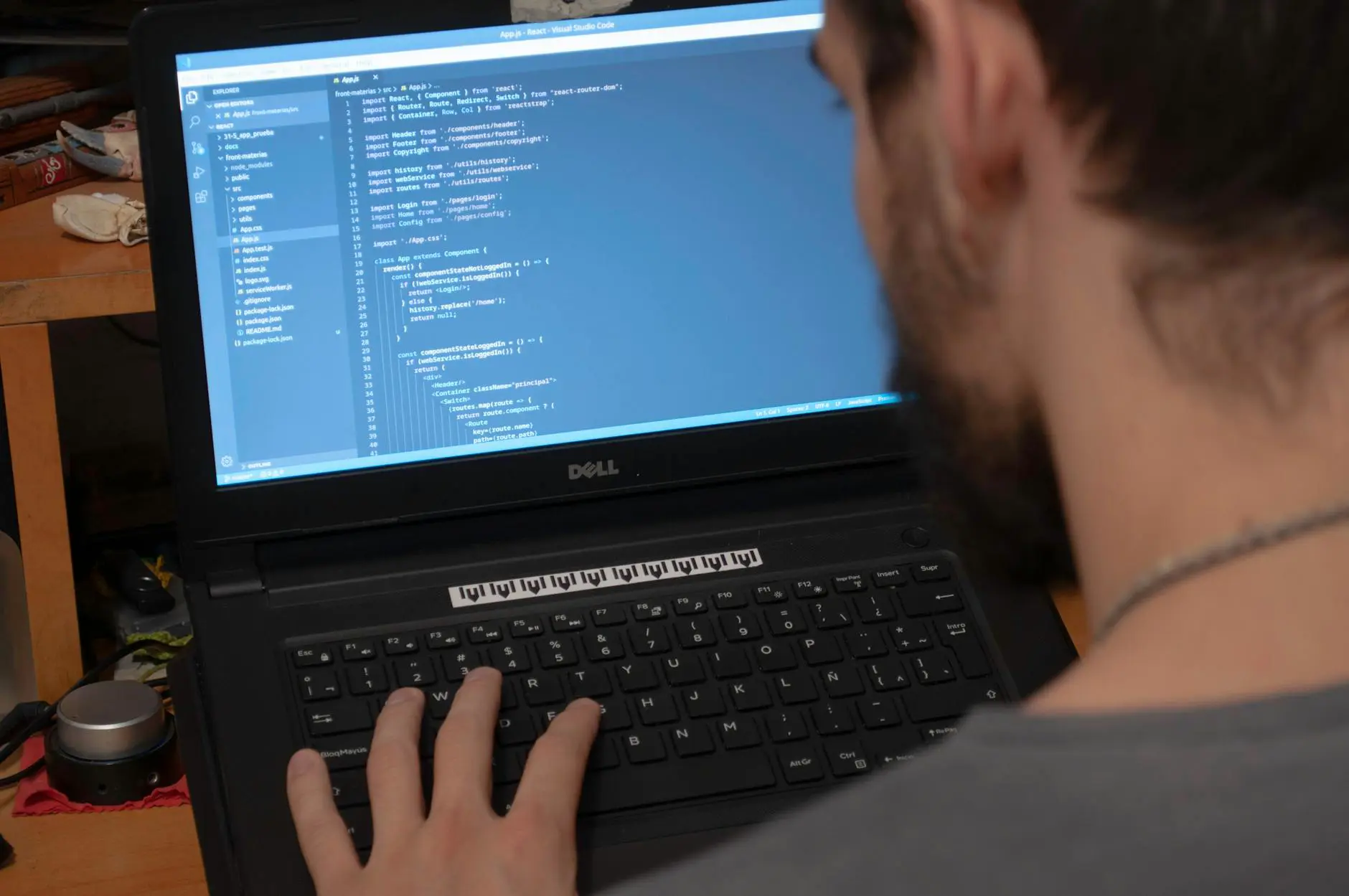
Clean Code: Readable, Maintainable, and Reliable Software
One of the greatest challenges in software development isn't writing code that works — it's writing code that is readable, understandable, and maintainable. As Robert C. Martin wrote in his landmark book "Clean Code": "Any fool can write code that a computer can understand. Good programmers write code that humans can understand."
What Is Clean Code?
Clean code is readable, well-organized, clearly purposeful, free of unnecessary repetition, and easily modifiable. Writing clean code isn't just a style preference — it's a professional responsibility.
Key Characteristics of Clean Code
- Its purpose is immediately clear when read
- Names are descriptive and consistent
- Functions are small and do one thing
- No duplicated code (DRY principle)
- Well-tested and designed for testability
- Minimal dependencies
SOLID Principles
S — Single Responsibility Principle
Every class or module should have exactly one responsibility. There should be only one reason for a class to change.
O — Open/Closed Principle
Software entities should be open for extension but closed for modification. New behaviors should be addable without changing existing code.
L — Liskov Substitution Principle
Subtypes must be substitutable for their base types without breaking the program.
I — Interface Segregation Principle
Clients should not be forced to depend on interfaces they don't use.
D — Dependency Inversion Principle
High-level modules should not depend on low-level modules. Both should depend on abstractions.
Meaningful Naming
The most critical factor in code readability is naming. Good names clearly express intent.
Naming Rules
- Use intention-revealing names:
elapsedTimeInDaysinstead ofd - Avoid disinformation: Don't call it
accountListif it's not a list - Make meaningful distinctions: If there's no difference between
dataandinfo, pick one - Use pronounceable names:
generationTimestampinstead ofgenymdhms - Use searchable names: Avoid single-letter variables
Function Design
Keep Them Small
Functions should rarely exceed 20-30 lines. Long functions are doing multiple things and need to be split.
Do One Thing
Each function should do exactly one thing. If you use the word "and" while describing what a function does, it's doing too much.
Minimize Parameters
The ideal function has zero parameters (niladic). One (monadic) or two (dyadic) are acceptable. More than three should almost always be wrapped in an object.
Avoid Side Effects
Functions should do what they say and nothing more. No hidden operations.
Refactoring: Continuous Code Improvement
Refactoring is the process of improving code's internal structure without changing its external behavior.
When to Refactor
- When the same code appears three times (Rule of Three)
- When a function is too long
- When a class carries too many responsibilities
- When names no longer reflect purpose
- When adding new features becomes difficult
Common Refactoring Techniques
- Extract Method: Pull logical sections out of long functions
- Rename Variable: Give more descriptive names
- Simplify Conditionals: Reduce complex if-else chains
- Introduce Object: Group related data into an object
Code Smells
| Code Smell | Symptom | Solution |
|---|---|---|
| Long Method | Function exceeds 30+ lines | Extract methods |
| God Class | One class does everything | Separate responsibilities |
| Duplicated Code | Same logic in multiple places | Apply DRY principle |
| Magic Numbers | Unexplained constants | Define meaningful constants |
| Dead Code | Unused code fragments | Clean up and remove |
| Excessive Comments | Too many comments explaining code | Rewrite code to be self-documenting |
Writing Testable Code
Clean code is testable code. To write testable code:
- Inject dependencies (Dependency Injection)
- Avoid global state
- Keep functions pure
- Use abstractions to create mockable structures
Conclusion
Writing clean code is a skill that requires continuous practice and conscious effort. With SOLID principles, meaningful naming, small functions, and regular refactoring, you can dramatically improve your code quality. At Ekolsoft, we embrace clean code culture to build sustainable and scalable software projects.


