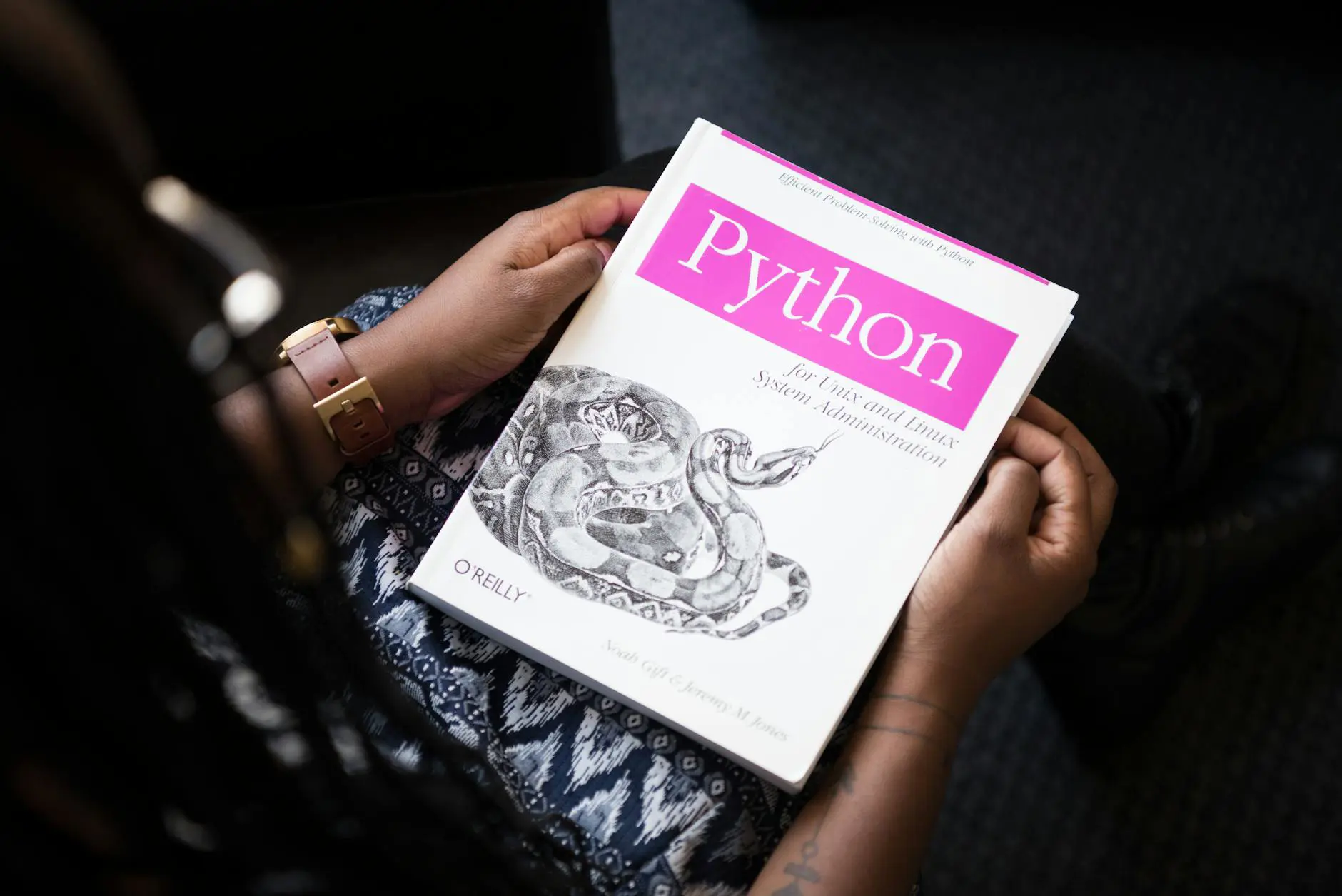
Why Python Dominates Data Science
Python has firmly established itself as the programming language of choice for data science, machine learning, and artificial intelligence. Its dominance is not accidental; Python offers a unique combination of simplicity, readability, and an extraordinarily rich ecosystem of libraries purpose-built for data work. Unlike languages that require complex syntax and steep learning curves, Python reads almost like English, making it accessible to people from non-programming backgrounds such as statisticians, researchers, and business analysts who want to leverage data.
The numbers speak for themselves. Python consistently ranks as the most popular language in data science surveys, with over 90% of data scientists using it as their primary tool. Major technology companies including Google, Netflix, Spotify, and NASA rely on Python for data analysis, machine learning pipelines, and scientific computing. The language's versatility means that skills learned for data science transfer directly to web development, automation, and software engineering, making Python a uniquely valuable investment in your career.
Essential Python Libraries for Data Science
NumPy: The Foundation
NumPy (Numerical Python) is the fundamental library for scientific computing in Python. It provides support for multi-dimensional arrays and matrices, along with a vast collection of mathematical functions to operate on them. NumPy arrays are significantly faster than Python lists for numerical computations because they are stored in contiguous memory blocks and operations are implemented in optimized C code. Nearly every other data science library in Python is built on top of NumPy, making it an essential first library to learn.
Pandas: Data Manipulation Made Easy
Pandas is the Swiss Army knife of data manipulation in Python. Built on NumPy, it provides two primary data structures: the DataFrame (a two-dimensional labeled table, similar to an Excel spreadsheet or SQL table) and the Series (a one-dimensional labeled array). Pandas makes it straightforward to load data from CSV, Excel, SQL databases, and JSON files; clean and transform messy data; filter, sort, and group records; merge and join datasets; and perform time series analysis. If you work with data in Python, you will use Pandas every day.
Matplotlib and Seaborn: Data Visualization
Matplotlib is Python's foundational plotting library, offering complete control over every aspect of a visualization. While powerful, Matplotlib can be verbose for common chart types. Seaborn, built on top of Matplotlib, provides a higher-level interface for creating attractive statistical visualizations with minimal code. Together, these libraries enable you to create line plots, bar charts, scatter plots, histograms, heatmaps, box plots, and virtually any other type of visualization you might need. For interactive visualizations, libraries like Plotly and Bokeh extend these capabilities with web-based interactivity.
Scikit-learn: Machine Learning
Scikit-learn is the go-to library for classical machine learning in Python. It provides simple and efficient tools for classification, regression, clustering, dimensionality reduction, model selection, and preprocessing. What makes scikit-learn exceptional is its consistent API design: once you learn how to use one model (fit, predict, transform), you can use any model in the library with the same interface. This consistency dramatically reduces the learning curve and makes it easy to experiment with different algorithms.
Deep Learning Frameworks
For deep learning and neural networks, Python offers several powerful frameworks. TensorFlow, developed by Google, is a comprehensive ecosystem for building and deploying machine learning models at scale. PyTorch, created by Facebook (now Meta), has become the favorite in research communities for its dynamic computation graphs and intuitive debugging. Keras provides a high-level API that can run on top of TensorFlow, making deep learning accessible to beginners. In 2026, these frameworks continue to evolve with improved performance, easier APIs, and better support for deploying models in production environments.
The Data Science Learning Path
If you are starting your data science journey with Python, following a structured learning path will help you build skills efficiently and avoid common pitfalls. Here is a recommended progression:
- Python fundamentals: Learn core Python including variables, data types, control flow, functions, classes, and file handling. Spend 2-4 weeks on this foundation.
- Data manipulation with Pandas: Master loading, cleaning, transforming, and analyzing data using Pandas DataFrames. Practice with real-world datasets from sources like Kaggle.
- Data visualization: Learn to create informative visualizations with Matplotlib and Seaborn. Focus on choosing the right chart type for different data stories.
- Statistics and probability: Build a solid understanding of descriptive statistics, probability distributions, hypothesis testing, and correlation. These concepts underpin all data science work.
- Machine learning: Start with scikit-learn to learn classification, regression, and clustering algorithms. Understand model evaluation, cross-validation, and feature engineering.
- Advanced topics: Explore deep learning with TensorFlow or PyTorch, natural language processing, time series analysis, or computer vision based on your interests and career goals.
Working with Jupyter Notebooks
Jupyter Notebooks are the standard interactive development environment for data science. A notebook combines executable code, rich text, visualizations, and equations in a single document, making it ideal for exploratory data analysis, prototyping, and communicating results. You can run code cell by cell, see the output immediately, and iterate quickly on your analysis.
JupyterLab, the next-generation interface, provides a more complete development environment with multiple panels, a file browser, and terminal access. Google Colab offers free cloud-hosted notebooks with GPU access, which is particularly valuable for deep learning experiments. For collaborative data science, platforms like Databricks, Kaggle, and Deepnote provide shared notebook environments where teams can work together on data projects in real time.
Career Opportunities in Data Science
Data science continues to be one of the most in-demand and well-compensated career paths in technology. Roles range from Data Analyst (focused on business reporting and visualization) to Data Scientist (applying statistical modeling and machine learning) to Machine Learning Engineer (building and deploying ML systems at scale). Salaries for experienced data scientists regularly exceed six figures in major markets, and the demand far outstrips the supply of qualified candidates.
Beyond traditional data science roles, Python skills open doors to related positions such as Business Intelligence Analyst, Quantitative Analyst, Research Scientist, AI Engineer, and Data Engineer. The versatility of Python means that regardless of which direction your career takes, the skills you build will remain relevant and transferable. Companies across every industry, from healthcare to finance, retail to manufacturing, are actively seeking professionals who can turn data into actionable insights.
Starter Projects to Build Your Portfolio
The best way to learn data science is by working on real projects. Here are starter project ideas that will build your skills and create an impressive portfolio:
- Exploratory Data Analysis: Download a dataset from Kaggle (such as the Titanic dataset or house prices) and perform a thorough analysis with visualizations and statistical insights.
- Predictive Modeling: Build a machine learning model to predict customer churn, housing prices, or stock market trends using scikit-learn.
- Natural Language Processing: Create a sentiment analysis tool that classifies movie reviews or social media posts as positive or negative.
- Dashboard Application: Build an interactive data dashboard using Streamlit or Dash that visualizes real-time data from a public API.
- Web Scraping and Analysis: Scrape data from websites using BeautifulSoup or Scrapy, clean it with Pandas, and derive insights through analysis and visualization.
Python's role in data science is stronger than ever in 2026. With its beginner-friendly syntax, powerful libraries, and vibrant community, there has never been a better time to start your data science journey. The skills you build with Python will not only open career doors but also fundamentally change how you think about and interact with data in every aspect of your professional life.