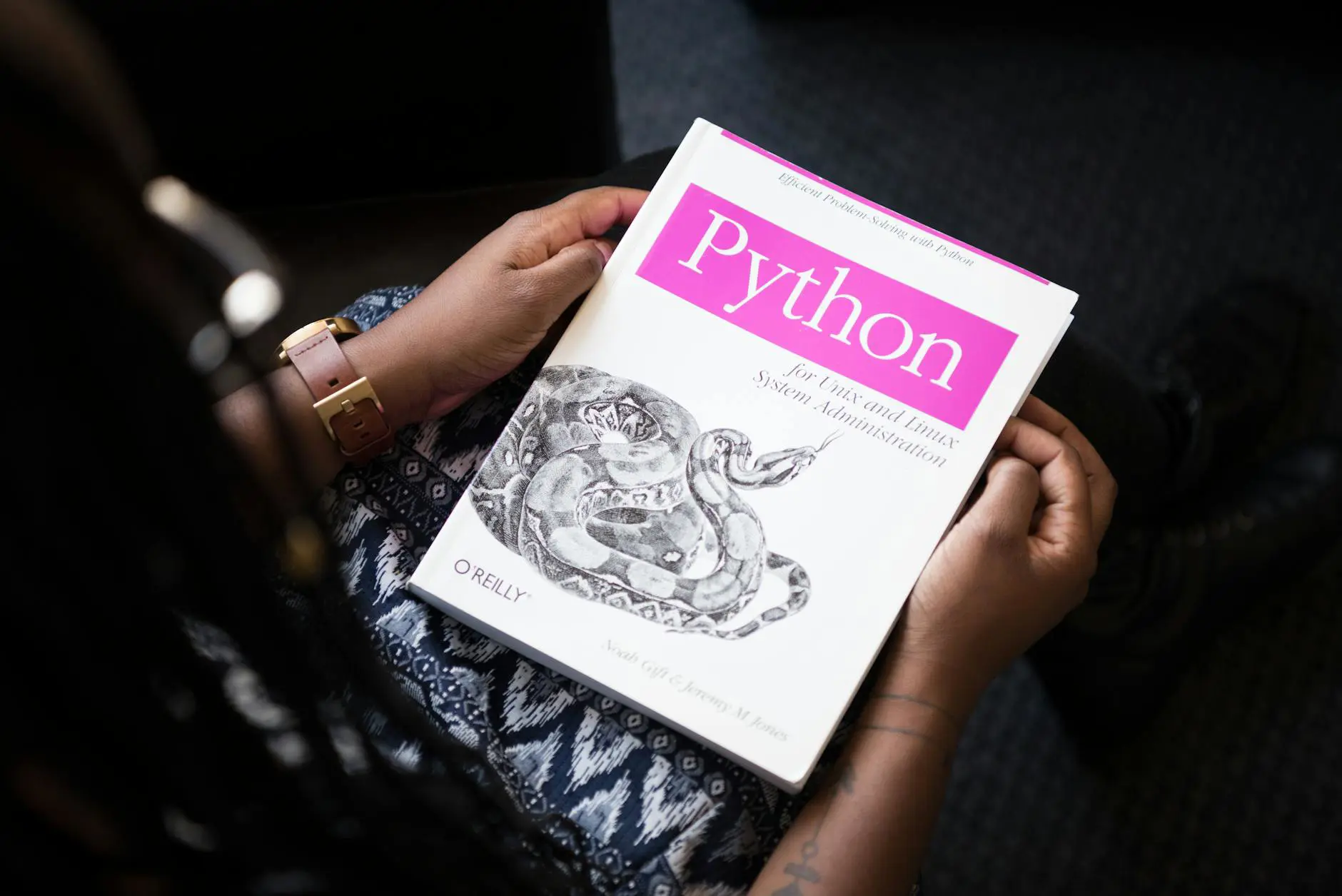
What Is Python and Why Should You Learn It?
Python is a high-level programming language developed by Guido van Rossum in 1991 that has become one of the most popular programming languages in the world. With its readable syntax, extensive library ecosystem, and versatile application areas, it has become an indispensable tool for both beginners and experienced developers alike.
As of 2026, Python holds a leading position in numerous critical fields including artificial intelligence, data science, web development, automation, and cybersecurity. It consistently ranks at the top of indices such as Stack Overflow and TIOBE. Learning Python is a strategic investment that will provide a significant advantage in your career.
Advantages of Python
Several important features set Python apart from other programming languages. Understanding these characteristics will clarify why you should choose this language for your development journey.
- Easy to Learn: Python's syntax closely resembles English and has a much simpler structure compared to other languages. This means you encounter minimal difficulty when taking your first steps into the programming world.
- Extensive Library Ecosystem: Over 500,000 packages are available on PyPI (Python Package Index). A ready-made solution exists for virtually every need you might have.
- Platform Independence: Python runs seamlessly on Windows, macOS, and Linux. You can execute your code across different operating systems without modifications.
- Strong Community Support: With millions of developers and thousands of open-source projects, you can find solutions to every problem you encounter.
- Versatile Applications: From web development to artificial intelligence, data analysis to game development, Python has an impressively broad range of use cases.
Python Installation and Development Environment
The first step in your Python learning journey is installing the language on your computer. As of 2026, Python 3.13 is the latest stable release. Python 2 is no longer officially supported, so make sure to start with Python 3.
You can download and install Python from python.org. During installation, don't forget to check the "Add Python to PATH" option. After installation, you can verify it by running the following command in your terminal or command prompt:
python --versionSeveral options are available for your development environment. Visual Studio Code or PyCharm Community Edition are recommended for beginners. Jupyter Notebook is particularly ideal for data science work.
Core Python Syntax
One of Python's greatest strengths is its clean and readable syntax. Unlike other languages, Python uses indentation rather than curly braces to define code blocks. This approach ensures your code is naturally organized and readable.
Variables and Data Types
In Python, no special keyword is needed to declare a variable. Simply write the variable name and assign a value using the equals sign. Python automatically determines the variable's type.
The fundamental data types are:
- int: Integers (e.g., 42, -7, 1000)
- float: Decimal numbers (e.g., 3.14, -0.5)
- str: Text strings (e.g., "Hello World")
- bool: Boolean values (True or False)
- list: Ordered and mutable collections
- dict: Collections of key-value pairs
- tuple: Ordered and immutable collections
- set: Collections of unique elements
Conditional Statements
Conditional statements are used to create decision-making mechanisms in your programs. In Python, conditional statements are written using the if, elif, and else keywords. A colon follows the condition expression, and the code block to be executed is written on the next line with indentation.
Loops
Loops are used for repetitive operations. Python has two fundamental loop types: the for loop iterates over a specific collection, while the while loop continues running as long as a certain condition is met.
The for loop is particularly used for traversing lists, strings, and other iterable objects. The range() function allows you to perform a specific number of iterations.
Functions and Modularity
Functions are reusable code blocks that perform a specific task. In Python, the def keyword is used to define functions. Functions make your code organized, readable, and easy to maintain.
In Python, functions are first-class objects. This means you can assign functions to variables, pass them as parameters to other functions, and return functions from functions. This feature forms the foundation for advanced concepts such as decorators and closures.
Lambda functions are single-line anonymous functions ideal for short and simple operations. They are frequently used alongside functions like map(), filter(), and sorted().
Data Structures and Collections
Python offers powerful built-in data structures. Using these structures effectively is key to writing efficient and performant programs.
Lists
Lists are Python's most widely used data structure. They can hold elements of different types, and you can add or remove elements freely. List comprehension allows you to perform powerful list operations in a single line and is one of Python's most elegant features.
Dictionaries
Dictionaries are data structures composed of key-value pairs. They provide fast data access and have natural compatibility with JSON format. They are frequently used when working with APIs, managing configuration files, and processing database results.
Sets and Tuples
Sets consist of unique elements and support mathematical set operations (union, intersection, difference). Tuples are immutable lists used for storing fixed data. Tuples are faster than lists and can be used as dictionary keys.
Object-Oriented Programming
Object-Oriented Programming (OOP) is the most effective way to manage large and complex projects in Python. Through classes and objects, you can model real-world concepts within your code.
OOP has four fundamental principles:
- Encapsulation: Keeps data and the methods that operate on that data together. In Python, attributes beginning with an underscore are conventionally considered private.
- Inheritance: Allows you to derive new classes from existing ones. It reduces code duplication and enables you to create hierarchical structures.
- Polymorphism: Makes it possible for different classes to implement the same interface in different ways. Thanks to duck typing, this concept is naturally supported in Python.
- Abstraction: Hides complex details and presents a simple interface. Abstract classes can be defined using the
abcmodule.
File Operations and Error Handling
File reading and writing operations are frequently required in real-world applications. In Python, you can safely perform file operations using the with statement. This structure guarantees that the file is automatically closed after the operation.
Error handling is a cornerstone of writing robust programs. try-except blocks allow you to catch unexpected errors and prevent your program from crashing. The finally block runs in all cases and is ideal for releasing resources. You can create your own custom exception classes to produce more meaningful error messages.
Python Use Cases
Python's versatility makes it a preferred language in many different fields. Here are the primary areas where Python excels:
- Artificial Intelligence and Machine Learning: Developing AI models is possible with libraries like TensorFlow, PyTorch, and scikit-learn. In 2026, this is the fastest-growing Python use case.
- Data Science and Analysis: You can perform data analysis, visualization, and statistical modeling with Pandas, NumPy, and Matplotlib.
- Web Development: You can build powerful web applications with frameworks like Django and Flask. FastAPI is a popular choice for modern API development.
- Automation and Scripting: Python is ideal for automating repetitive tasks, managing file operations, and performing system administration.
- Cybersecurity: It is widely used for developing penetration testing tools, security analysis, and network scanning utilities.
Python Learning Roadmap for 2026
Planning your Python learning process in a structured way will significantly increase your chances of success. Here is the recommended phased learning plan:
Beginner Level (1-2 Months)
Learn core syntax, variables, data types, conditional statements, loops, and functions. Reinforce your knowledge by building simple projects. You can develop a calculator, a dictionary application, or a simple text-based game.
Intermediate Level (2-4 Months)
Deepen your understanding of object-oriented programming, file operations, error handling, modules, and packages. Learn database operations and API usage. At this stage, you can develop a web scraper, a personal budget tracking application, or a simple web API.
Advanced Level (4-8 Months)
Learn decorators, generators, context managers, asynchronous programming, and design patterns. Explore frameworks and libraries relevant to your chosen specialization area. Build real-world projects to create your portfolio.
Effective Python Learning Tips
These tips, distilled from years of experience, will accelerate your Python learning process:
- Write code every day: Practicing at least 30 minutes daily is far more effective than working for long periods once a week.
- Learn through projects: Instead of only reading theory, develop real projects. Apply every concept you learn in a project.
- Embrace errors: Read error messages carefully and try to understand them. Every error is a learning opportunity.
- Join communities: Be active on platforms like Stack Overflow, Reddit, and GitHub. Review others' code and share your own projects.
- Read the documentation: Python's official documentation is comprehensive and well-written. Always review a library's official documentation before using it.
- Perform code reviews: Study the code of open-source projects on GitHub to learn different approaches and best practices.
Conclusion
Python is one of the most valuable programming languages to learn in 2026. With its easy learning curve, broad application areas, and strong community support, it is an excellent choice for both career changers and those looking to expand their existing skill set. By following the roadmap shared in this guide, you can systematically achieve proficiency in Python.
Remember, learning to program is a marathon, not a sprint. Be patient, practice regularly, and most importantly, enjoy the process. The only limit to what you can build with Python is your imagination.
Contact us for professional software development services or your Python-based projects. Our expert team is ready to help you bring your ideas to life.