What Is a Technical Interview and Why Does It Matter?
One of the most significant hurdles facing every developer seeking a career in the software industry is the technical interview. Particularly at major technology companies such as Google, Amazon, Meta, Apple, and Netflix — collectively known as FAANG — technical interviews form the most critical stage of the hiring process. These interviews are designed to assess a candidate's problem-solving skills, algorithmic knowledge, and proficiency with data structures.
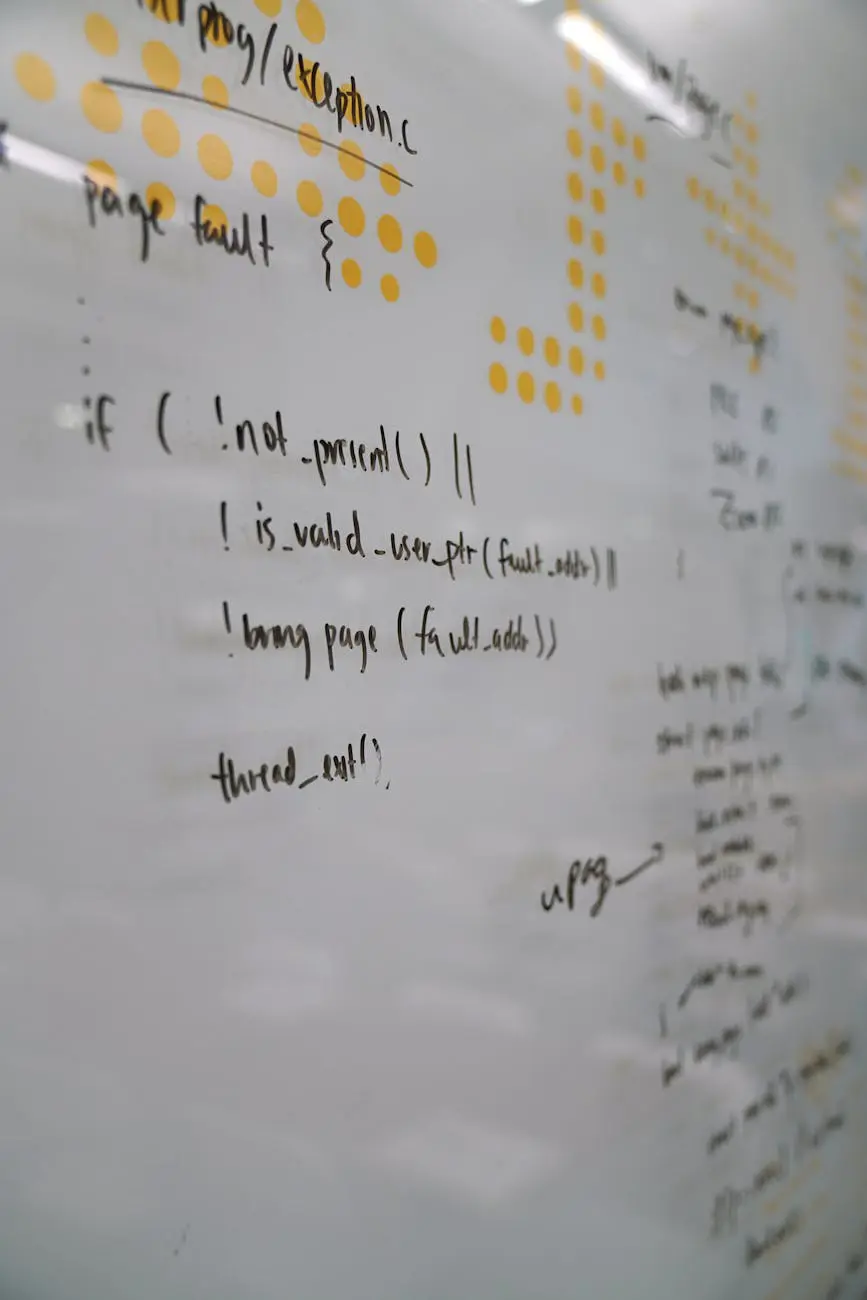
Technical interviews are typically conducted in real time on a whiteboard or in an online code editor. Within a set timeframe, the candidate must analyze the given problem, determine the most appropriate solution approach, and write clean, functional code. Throughout this process, it is not enough to simply arrive at the correct answer; clearly communicating your thought process is equally important.
Fundamental Data Structures: The Building Blocks of Interviews
The first step in preparing for technical interviews is gaining a deep understanding of fundamental data structures. Knowing the strengths and weaknesses of each data structure enables you to apply the right tool to the right problem.
Arrays and Linked Lists
Arrays consist of elements stored contiguously in memory. Accessing an element by index takes O(1) time, while insertion and deletion operations can require O(n) time. Linked lists, on the other hand, are composed of nodes where each node points to the next. Insertion at the head can be done in O(1) time, but searching requires O(n) time.
Common array questions in interviews include the two-pointer technique, sliding window problems, and binary search on sorted arrays. For linked lists, topics such as reversal, cycle detection, and merging frequently appear.
Stacks and Queues
A stack operates on the last-in-first-out (LIFO) principle, while a queue follows the first-in-first-out (FIFO) principle. Both structures support insertion and removal in O(1) time. They are commonly used in problems involving parenthesis matching, expression evaluation, and breadth-first search.
Hash Tables
Hash tables are a powerful data structure that stores key-value pairs and supports search, insertion, and deletion in average O(1) time. They are among the most frequently used structures in interviews because they allow you to solve many problems far more efficiently than a brute force approach. Classic problems such as two-sum, anagram detection, and frequency counting rely heavily on hash tables.
Trees and Graphs
Binary trees, and binary search trees in particular, constitute a large portion of interview questions. A solid understanding of depth-first search and breadth-first search traversal methods is essential. Graphs are used to model more complex relationships and appear in problems involving shortest paths, connected components, and topological sorting.
Algorithm Paradigms: Choosing the Right Approach
Knowing data structures alone is not sufficient; you must also be able to design efficient algorithms that operate on these structures. Let us examine the algorithm paradigms most commonly encountered in technical interviews.
Sorting and Searching Algorithms
Understanding and implementing sorting algorithms with O(n log n) time complexity — such as quicksort, merge sort, and heapsort — is essential. Binary search enables you to search sorted data in O(log n) time and is a staple of technical interviews.
Dynamic Programming
Dynamic programming is one of the most challenging topics in technical interviews. It works by breaking a large problem into smaller subproblems and storing the solutions to those subproblems to avoid redundant computation. Classic problems solved with dynamic programming include the Fibonacci sequence, longest common subsequence, the knapsack problem, and climbing stairs.
When approaching dynamic programming problems, follow these steps:
- Break the problem into subproblems and identify overlapping subproblems
- Define the base cases
- Formulate the recurrence relation
- Choose between top-down (memoization) or bottom-up (tabulation) approaches
- Optimize time and space complexity
Greedy Algorithms and Backtracking
Greedy algorithms aim to reach a global optimum by making the locally best choice at each step. Activity selection, Huffman coding, and minimum spanning tree problems fall into this category. Backtracking systematically tries all possible solutions and prunes those that are not viable. It is used in problems such as the N-Queens problem, Sudoku solvers, and combination generation.
Big O Notation: The Foundation of Performance Analysis
In technical interviews, it is not enough for your code to simply produce the correct output; you must also be able to explain how efficient it is. Big O notation is the standard representation used to express the time and space complexity of an algorithm.
The most common time complexities, ordered from smallest to largest, are:
- O(1) - Constant time: Looking up an element in a hash table
- O(log n) - Logarithmic: Binary search
- O(n) - Linear: A single pass through an array
- O(n log n) - Log-linear: Efficient sorting algorithms
- O(n²) - Quadratic: Two nested loops
- O(2ⁿ) - Exponential: Generating subsets
- O(n!) - Factorial: Generating permutations
Interviewers typically ask about the time and space complexity of your initial solution and then inquire whether a better solution exists. For this reason, starting with a brute force solution and optimizing step by step is an effective strategy.
LeetCode Strategies: Effective Study Methods
Platforms such as LeetCode, HackerRank, and CodeSignal are indispensable tools for technical interview preparation. However, solving problems at random is far less effective than adopting a strategic approach.
Topic-Based Study Plan
Grouping problems by topic makes it easier to recognize patterns. Start with array and string problems, then move on to linked lists, trees, and graphs. Aim to solve at least fifteen problems per topic and gradually increase the difficulty level.
Difficulty Distribution
An effective study plan should distribute problems as follows:
- Easy problems should make up thirty percent of your practice and reinforce fundamental patterns
- Medium problems should constitute fifty percent and reflect the majority of real interview questions
- Hard problems should account for twenty percent and teach advanced techniques
Problem-Solving Framework
Approaching each problem with a systematic framework significantly improves your success rate. Follow these steps:
- Read the problem carefully and note all constraints
- Work through examples by hand to discover the pattern
- Consider edge cases and add them to your test scenarios
- Think of the brute force solution and determine its complexity
- Search for a more efficient approach
- Write pseudocode to verify the logic
- Write clean, readable code
- Test your code and check edge cases
The FAANG Interview Process: What to Expect
The interview process at major technology companies typically consists of several stages. The first stage is a technical screening conducted over phone or video. This stage usually involves one or two medium-difficulty algorithm questions and lasts approximately forty-five minutes.
Candidates who pass the screening are invited to on-site interview rounds. These rounds generally comprise four to six sessions, each evaluating different areas. In addition to algorithm and data structure questions, system design, behavioral questions, and coding proficiency are also assessed.
Success in technical interviews is not solely about finding the correct answer. Clearly articulating your thought process, communicating effectively with the interviewer, and being receptive to constructive feedback are just as important as technical skills.
Tips for Interview Day
After weeks of preparation, apply the following strategies to maximize your performance on interview day:
- Do not start coding before fully understanding the question; ask clarifying questions if needed
- Share your thought process out loud; the interviewer wants to know how you think
- Do not hesitate to ask for hints when you are stuck; this demonstrates communication skills, not weakness
- After writing your code, always trace through it by hand and verify edge cases
- Manage your time carefully; delivering a working solution is better than striving for a perfect one
- After the interview, note the lessons learned and use them to prepare for future interviews
Long-Term Preparation Strategy
Technical interview preparation should be viewed as a marathon, not a sprint. The ideal preparation period ranges from eight to twelve weeks and should include at least one hour of practice per day. During the initial weeks, review fundamental topics. In the middle weeks, focus intensively on problem solving. In the final weeks, conduct realistic mock interviews.
Platforms such as Pramp, Interviewing.io, and LeetCode Contest allow you to practice in real-time interview conditions. Additionally, finding a study partner and conducting mock interviews with each other is extremely beneficial.
Remember that technical interviews are merely a gateway. Cultivating a habit of continuous learning, contributing to open-source projects, and solving real-world problems will make a far greater impact on your career in the long run. The algorithmic thinking skills you develop during your preparation will continue to guide you in your daily work long after you have passed the interview.


