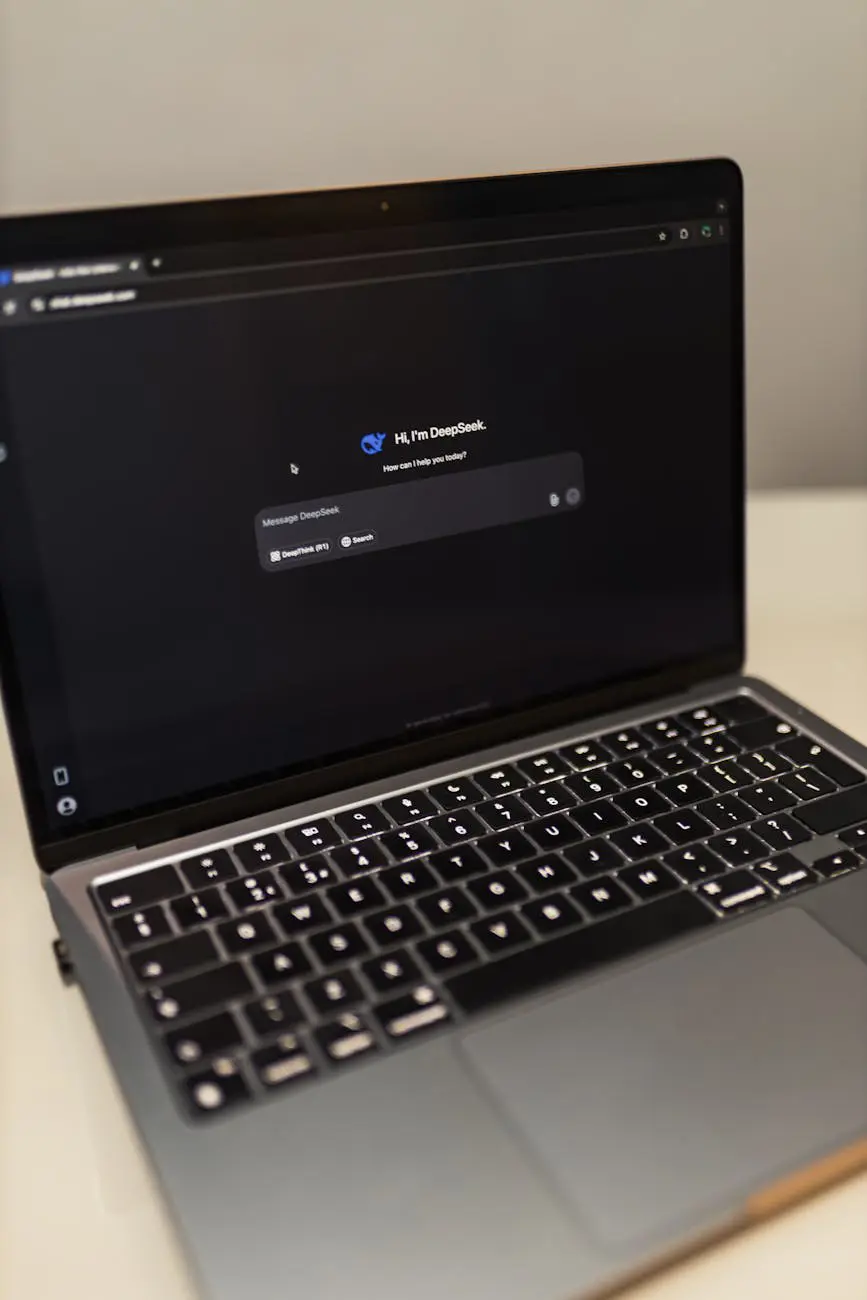
In an era where AI tools have permeated every aspect of our lives, knowing how to communicate effectively with these systems is more important than ever. Prompt engineering is the art and science of crafting optimal instructions for AI models to achieve the best possible results. In this comprehensive guide, you will discover what prompt engineering is, why it has become so crucial, and all the nuances of writing effective prompts.
1. What is Prompt Engineering?
Prompt engineering is the systematic process of designing, optimizing, and refining the inputs used to interact with large language models (LLMs). A prompt is any command, question, or instruction you give to an AI system. Prompt engineering is the discipline of crafting these instructions in a way that ensures you receive the most accurate, consistent, and high-quality output possible from the model.
To put it simply: an AI model is like an incredibly talented assistant waiting for instructions. The clearer and better-structured your instructions are, the higher the quality of results you will get. Vague or incomplete instructions lead to confusing, insufficient, or incorrect outputs.
💡 Tip: Prompt engineering is not limited to ChatGPT. It applies to all AI tools including Claude, Gemini, Midjourney, DALL-E, and Stable Diffusion. Each model has its own strengths and prompt expectations.
A Brief History of Prompt Engineering
The concept of prompt engineering began gaining popularity with the release of GPT-3 in 2020. As the capabilities of large language models expanded, a new discipline emerged focused on discovering the most effective ways to interact with these models. With the launch of ChatGPT in 2022, prompt engineering became one of the most discussed topics in the technology world, and by 2024-2025, it evolved into a fully recognized profession.
2. Why Does Prompt Engineering Matter?
The same AI model can produce drastically different quality results depending on the prompt. The difference between a well-crafted prompt and a poorly written one can be as vast as the difference between a usable output and a completely worthless one.
The Productivity Impact
Research shows that good prompt engineering practices can improve AI output quality by 40-70%. This means you can reach your desired outcome with far fewer trial-and-error iterations and in much less time using the same model. In business, this translates directly into time and cost savings.
3. Core Principles: Clarity, Context, and Specificity
3.1 Clarity
The clearer your prompt, the easier it is for the AI to understand you correctly. Avoid ambiguous expressions, words with double meanings, and complex sentence structures. A good test is to read your prompt and ask: "Could this be interpreted in more than one way?"
❌ Vague: "Explain that topic"
✅ Clear: "Explain the concept of overfitting in machine learning, its causes, and prevention methods in 500 words. Use non-technical language."
3.2 Context
Providing sufficient context to the AI is the key to getting accurate and relevant outputs. Context can include your target audience, purpose of use, scope of the topic, and the expected tone or style. The AI cannot read your mind; the more relevant information you provide, the better results you will get.
💡 Tip: Consider adding these details to your prompt: Who are you writing for? What industry? How knowledgeable is the reader? Where will the output be used? These details dramatically increase output quality.
3.3 Specificity
General requests produce general answers. The more specific you are, the more usable and targeted your outputs will be. Provide numbers, formats, constraints, and examples. Saying "write 5 bullet points, each maximum 30 words" is far more effective than "write a few points."
4. Prompt Patterns and Techniques
4.1 Role-Based Prompting
Assigning a specific role to the AI is one of the most powerful techniques for shaping the tone, depth, and perspective of outputs. The model adopts terminology, style, and approach appropriate to the assigned role.
// Role-Based Prompt Example
"You are a digital marketing expert with 15 years of experience. Create a 6-month digital marketing strategy for an e-commerce startup. Budget is $2,000/month. List channels in priority order with expected ROI."
4.2 Chain-of-Thought (CoT) Prompting
In this technique, the AI is asked to think step by step. It is extremely effective for complex problems, math questions, and logical reasoning. The model explains each step as it reaches its conclusion, which significantly reduces the error rate.
// Chain-of-Thought Example
"A company has annual revenue of $5 million, expenses of $3.8 million, and a tax rate of 22%. Calculate the net profit. Show your work step by step and explain which formula you used at each step."
4.3 Few-Shot Prompting
By giving the AI a few examples of the desired output, you enable the model to understand the pattern and continue in the same format. This is particularly effective when you want a specific format, tone, or structure.
// Few-Shot Prompt Example
Write product descriptions. Examples:
Product: Bluetooth Headphones → "Discover wireless freedom! 30-hour battery life and active noise cancellation for a perfect audio experience."
Product: Smartwatch → "Your health on your wrist! Heart rate monitoring, sleep analysis, and 50+ sport modes to optimize your life."
Product: Portable Charger → ?
4.4 Zero-Shot Prompting
Zero-shot prompting means asking the AI to perform a task using only instructions, without providing any examples. Modern language models are quite successful at many tasks in a zero-shot setting. It is generally sufficient for simple and medium-complexity tasks, but for complex or specially formatted outputs, the few-shot technique is preferred.
// Zero-Shot Example
"Classify the following customer review as positive, negative, or neutral: 'The product is pretty good but shipping was very late.'"
5. Advanced Techniques
5.1 System Prompts
System prompts are high-level instructions that define the AI's general behavior, personality, and constraints. They are critically important in API usage and custom chatbot development. A system prompt defines the rules the model must follow throughout the entire conversation.
// System Prompt Example
"You are a customer support assistant. Always be polite and professional. If asked about pricing, redirect the customer to the sales team. Do not comment on competitor products. Keep responses under 150 words."
5.2 Temperature Setting
The temperature parameter controls how creative or consistent the AI's outputs will be. It ranges from 0 to 2.
5.3 Structured Output
By requesting output in a specific format (JSON, XML, Markdown, table, etc.), you can use the results directly in your applications. This technique is indispensable for automation and integration scenarios.
// Structured Output Example
"Analyze the following product reviews and return results in this JSON format:
{
"sentiment": "positive/negative/neutral",
"keywords": ["word1", "word2"],
"score": 1-5,
"summary": "one-sentence summary"
}"
⚠️ Warning: When requesting structured output, you cannot guarantee the model will always produce 100% valid JSON or XML. Especially with complex structures, it is important to programmatically validate the output and add error handling.
6. Prompt Examples for Different AI Tools
6.1 Text Prompts for ChatGPT / Claude
Effective prompts for text-based AI tools generally follow this structure: Role + Context + Task + Format + Constraints.
// Content Creation Prompt
"[Role] You are an experienced content marketing specialist. [Context] You are writing a blog for a fintech startup targeting professionals aged 25-40. [Task] Create a blog post titled '5 Golden Rules of Personal Finance Management.' [Format] Include an H3 heading for each rule, a 100-word explanation, and a practical tip. [Constraints] Avoid jargon, use a friendly but professional tone."
6.2 Visual Prompts for Midjourney / DALL-E
Prompts for visual AI tools differ structurally from text models. Here, the focus is on visual elements such as style, lighting, composition, color palette, and reference artists.
// Midjourney Prompt Example
"A futuristic office workspace with holographic displays, a person interacting with AI interface, soft blue and purple lighting, photorealistic, 8k, cinematic composition, depth of field --ar 16:9 --v 6"
6.3 Code Prompts for GitHub Copilot
When writing prompts for code assistants, it is important to provide clear information about the programming language, framework, coding standards, and desired behavior. Well-structured comments and docstrings significantly improve code assistant performance.
// Code Prompt Example
"""
Write an email validation function.
- Language: Python 3.11+
- Use regex
- Raise ValueError for invalid emails
- Add type hints
- Include unit test examples
"""
7. Common Mistakes to Avoid
Here are the most common mistakes when writing prompts and how to avoid them:
⚠️ Mistake 1: Being Too Vague
Vague prompts like "write something" or "help me" make it difficult for the model to guess your expectations. Always specify what you want, how much you want, and how you want it.
⚠️ Mistake 2: Asking for Everything at Once
Requesting overly complex, multi-step tasks in a single prompt reduces quality. Break complex tasks into subtasks and proceed step by step. Use the output of each step as input for the next.
⚠️ Mistake 3: Not Specifying Output Format
If you do not specify the desired format, the model chooses one based on its own preference. Clearly state whether you want a list, paragraph, table, or JSON.
⚠️ Mistake 4: Using Negative Instructions
Saying "do this" is more effective than "don't do that." For example, instead of "Don't use technical terms," say "Use plain, understandable language and explain technical terms in everyday words."
⚠️ Mistake 5: Skipping the Iterative Approach
Expecting the first prompt to yield perfect results is unrealistic. Even the best prompt engineers work iteratively: write, test, analyze, improve. Each attempt helps you further refine your prompt.
8. Career Opportunities in Prompt Engineering
Prompt engineering is one of the fastest-growing career fields in the AI era. Combining both technical and creative skills, this field offers a wide range of job opportunities.
Career Paths
💡 Tip: You do not necessarily need to know programming to start a career in prompt engineering. Good language skills, analytical thinking ability, and curiosity about AI tools are a sufficient starting point. However, learning Python, API integrations, and basic ML concepts will give you a significant advantage as you advance your career.
Learning Resources
The most effective ways to learn prompt engineering include: reading official documentation from OpenAI, Anthropic, and Google; practicing across different models; joining community forums; and gaining experience on real-world projects. Consistent practice is the single most important success factor in this field.
9. Frequently Asked Questions (FAQ)
Is prompt engineering hard to learn?
No, it is quite accessible at the basic level. Anyone with good communication skills and analytical thinking ability can learn prompt engineering. You can grasp the fundamental concepts in a few days, but mastering it requires continuous practice and experience. Programming knowledge is not required to start, but it is beneficial at advanced levels.
Which is the best AI model?
The "best" model depends on your use case. ChatGPT (GPT-4o) is strong for general-purpose tasks; Claude excels at long text analysis and coding; Gemini has advantages in multimodal processing and Google integration. Understanding each model's strengths and weaknesses helps you choose the right tool for the job.
Will prompt engineering be made obsolete by AI?
Not in the short to medium term. Even as AI models improve, structuring the right instructions for complex business scenarios, evaluating outputs, and iteratively refining them will continue to require human expertise. The role of prompt engineering will evolve over time, but it will not disappear. Demand for professionals who optimize human-AI collaboration will continue to grow.
Should prompts be long or short?
It depends on the complexity of the task. Short and concise prompts are sufficient for simple tasks. For complex tasks, detailed prompts yield better results. The golden rule is: do not add unnecessary information, but do not skip any necessary information either. What matters is the information density, not the length of the prompt.
Is a prompt engineering certification necessary?
It is not mandatory, but it can accelerate your career. There is currently no standardized certification in the industry, but Google, AWS, and independent training platforms offer various certificate programs. The most valuable proof is real projects you can showcase in your portfolio and the results you have achieved. Practical experience is always more valuable than certificates.
Conclusion
Prompt engineering is a fundamental skill that everyone should learn in the age of artificial intelligence. Whether you are a software developer, a marketing specialist, or a student, effective prompt writing skills can multiply your productivity. By applying the core principles (clarity, context, specificity), experimenting with different prompt patterns, and practicing continuously, you can become an expert in this field.
Remember: writing the perfect prompt is a process. Every attempt makes you a better prompt engineer. Start today, experiment with different techniques, and discover the true potential of artificial intelligence!


