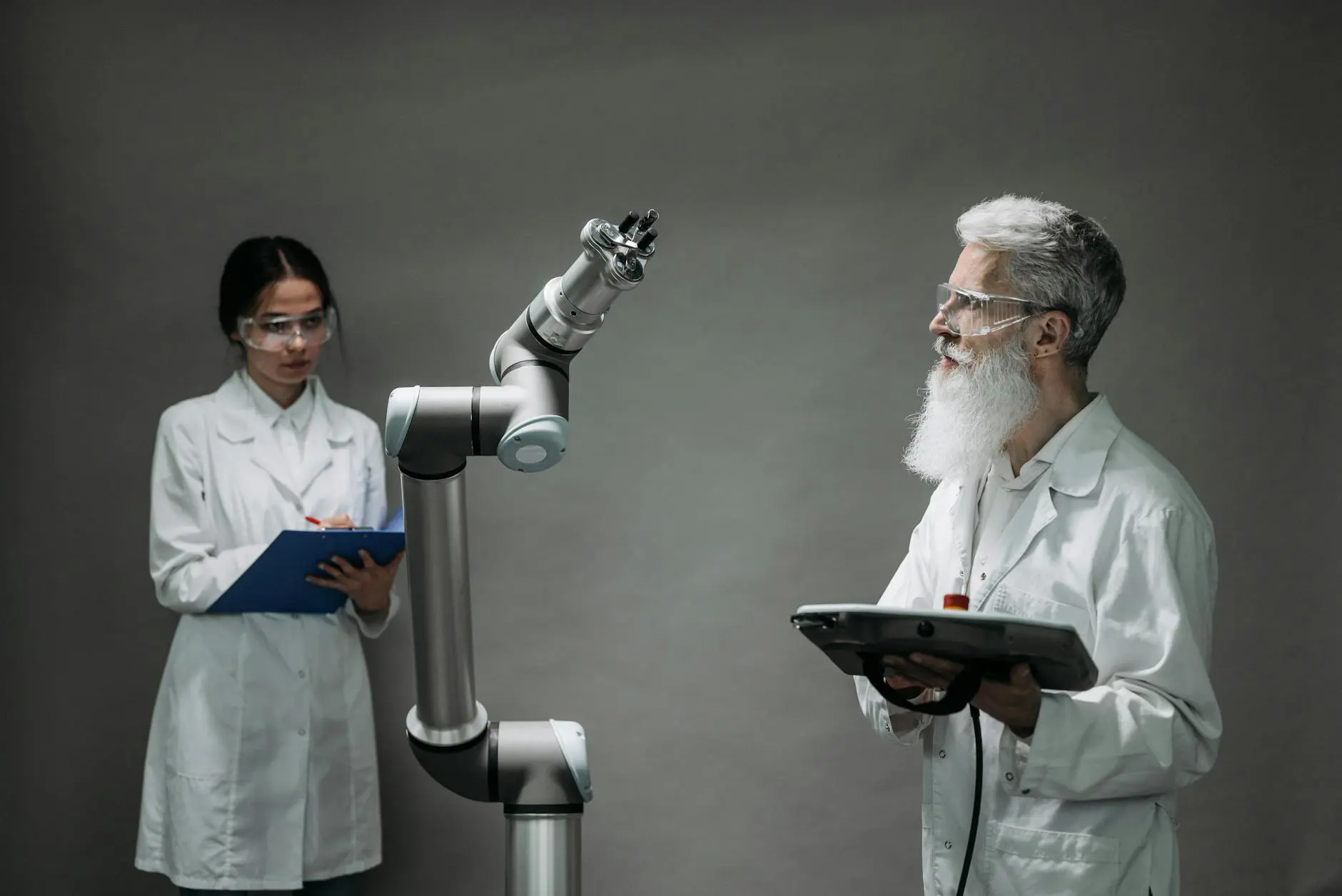
From the Industrial Revolution to the internet age, every major technological leap has sparked fears of mass unemployment. Today, Artificial Intelligence (AI) has reignited this debate more intensely than ever. But will AI truly eliminate all jobs, or will it transform them? In this comprehensive guide, we separate facts from myths using global reports, sector analyses, and concrete data.
Table of Contents
- Historical Perspective: Automation Fears Through the Ages
- Which Jobs Are Most at Risk?
- Which Jobs Are Safe?
- New Jobs AI Creates
- Augmentation vs. Replacement
- Industry-by-Industry Analysis
- Global Reports: WEF, McKinsey, OECD
- Skills Needed for the AI Era
- Reskilling Strategies
- Case Studies
- How to Future-Proof Your Career
- Frequently Asked Questions
1. Historical Perspective: Automation Fears Through the Ages
The fear of technology destroying jobs is nothing new. In the early 1800s, the Luddite movement in England saw workers smashing textile machinery they believed would steal their livelihoods. In the mid-20th century, assembly lines triggered the same panic. In the 1980s, personal computers were the threat. In the 2000s, the internet was supposed to make entire industries obsolete.
Yet history has consistently shown: every technological revolution destroys some jobs while creating far more new ones. The automobile eliminated horse-drawn carriage drivers but birthed automotive manufacturing, insurance, tourism, and logistics. Computers made typists obsolete but created software development, data analysis, and digital marketing — employing millions more.
Important Historical Note
In 1930, economist John Maynard Keynes coined the term "technological unemployment." Yet since then, the world population has quadrupled while employment rates have continued to rise. Fear has always outpaced reality.
Is AI different this time? Some experts say yes, because AI can automate not just physical but cognitive tasks. However, this "it's different this time" argument has been made during every technological era. The truth is always more nuanced than the headlines suggest.
2. Which Jobs Are Most at Risk?
The jobs most vulnerable to AI and automation share common characteristics: they are repetitive, rule-based, predictable, and deal with structured data. According to McKinsey, approximately 60% of all occupations have at least 30% of activities that could be automated.
| Job / Task | Automation Risk | Why? |
|---|---|---|
| Data Entry Operator | 95%+ | Entirely repetitive, rule-based |
| Cashier | 90%+ | Self-checkout and digital payments |
| Basic Bookkeeping | 80%+ | Structured data processing |
| Call Center Agent | 75%+ | AI chatbots and voice assistants |
| Factory Assembly Worker | 70%+ | Robotic automation |
| Truck/Taxi Driver | 60-70% | Autonomous vehicles (long-term) |
| Basic Translation | 65%+ | LLM-based translation systems |
Tip
There's a crucial difference between a job being "eliminated" and being "transformed." Accounting won't disappear, but basic bookkeeping tasks will be automated. Accountants will shift toward strategic advisory and analytical roles.
3. Which Jobs Are Safe?
The areas where AI struggles are precisely where humans excel. Jobs requiring empathy, creativity, complex decision-making, physical dexterity, and social intelligence will remain safe for the foreseeable future.
| Job Category | Safety Level | Why Safe? |
|---|---|---|
| Doctor / Surgeon | High | Empathy, physical intervention, ethical decisions |
| Psychologist / Therapist | Very High | Human connection and emotional intelligence |
| Teacher / Educator | High | Mentoring, motivation, social interaction |
| Artist / Creative Director | High | Original vision and creativity |
| Plumber / Electrician | High | Unstructured physical environments |
| Strategic Executive / CEO | High | Leadership, vision, complex decision-making |
The common thread is clear: AI automates routine tasks, not uniquely human capabilities. An AI can read an X-ray brilliantly, but it cannot deliver a cancer diagnosis to a patient with compassion. A chatbot can resolve a complaint, but it cannot fully address a customer's emotional needs.
4. New Jobs AI Creates
Like every major technological shift, AI is creating entirely new job categories that didn't exist before. According to the World Economic Forum (WEF), 97 million new jobs are expected to emerge between 2025 and 2030.
Technical Roles
- AI/ML Engineer
- Prompt Engineer
- AI Training Data Specialist
- Robotic Process Automation (RPA) Expert
- AI Infrastructure Architect
Ethics & Governance
- AI Ethics Specialist
- Algorithm Auditor
- AI Policy Advisor
- Data Privacy Officer (DPO)
- Human-AI Interaction Designer
Beyond these, AI indirectly creates jobs in sales and marketing of AI-powered products, maintenance and updating of AI systems, and quality control of AI outputs. According to LinkedIn data, job postings containing "AI" have increased by over 300% in the last three years.
5. Augmentation vs. Replacement
The most critical nuance in the AI debate lies here. In most scenarios, AI empowers humans rather than replacing them. This concept is known as "Human Augmentation" or "AI Augmentation."
Augmentation in Action
| Doctor + AI | AI pre-analyzes X-rays/MRIs, the doctor makes the final call. Diagnostic accuracy improves by 40%. |
| Lawyer + AI | AI scans thousands of documents in seconds, the lawyer develops strategy and defense. Research time reduced by 70%. |
| Developer + AI | AI provides code suggestions and debugging, the developer makes architectural decisions. Productivity increases by 55%. |
| Marketer + AI | AI handles data analysis and A/B testing, the marketer drives strategy and creative decisions. |
According to Harvard Business Review, companies that use AI most effectively adopt the "AI with humans" approach rather than "AI instead of humans." These companies show 38% higher profitability compared to competitors.
6. Industry-by-Industry Analysis
| Industry | Impact Level | Transformation Details |
|---|---|---|
| Manufacturing | Very High | Robotic automation, AI quality control, predictive maintenance. Assembly workers decrease, robot operators increase. |
| Finance / Banking | Very High | Algorithmic trading, fraud detection, automated credit assessment. Teller roles minimized, fintech roles rising. |
| Healthcare | Medium-High | Diagnostic support, drug discovery, personalized treatment. Doctors empowered, administrative roles reduced. |
| Education | Medium | Personalized learning, automated grading. Teacher role evolves into mentor and guide. |
| Legal | Medium-High | Document review and contract analysis automated. Strategy and negotiation remain human. |
| Agriculture | Medium | Precision farming, drone spraying, harvest robots. Farmer role evolves to technology manager. |
| Retail | Very High | E-commerce, cashierless stores, automated inventory. Customer experience specialists increasing. |
7. Global Reports: WEF, McKinsey, OECD
The world's most respected research organizations have extensively studied AI's impact on employment. Here are the key findings:
World Economic Forum (WEF)
- 85 million jobs will be displaced by 2030
- 97 million new jobs will be created
- Net effect: +12 million jobs
- 50% of workers will need reskilling
McKinsey Global Institute
- 375 million workers may need to switch occupations by 2030
- 60% of jobs have at least 30% automatable tasks
- Fully automatable jobs: only 5%
- Productivity gains of 1.2% annually
OECD
- 14% of jobs in OECD countries at high automation risk
- 32% will undergo significant transformation
- Low-skilled workers most affected
- Education and reskilling investment critical
Common Conclusion
All three reports share the same message: AI will drive massive job transformation, not wholesale job destruction. Those caught unprepared will be the losers; those who adapt will be the winners.
8. Skills Needed for the AI Era
Succeeding in the future workplace requires a blend of both technical and human skills. Here are the must-have competencies:
Cognitive & Technical Skills
- Data Literacy: Understanding, interpreting, and using data for decisions
- AI Literacy: Knowing what AI can and cannot do
- Critical Thinking: Questioning and evaluating AI outputs
- Digital Skills: Using AI tools effectively
- Programming Basics: Foundational coding and automation understanding
Human & Social Skills
- Creativity: Generating original ideas and innovative solutions
- Emotional Intelligence: Managing relationships and showing empathy
- Adaptability: Adjusting to rapidly changing environments
- Complex Problem Solving: Finding solutions in ambiguous situations
- Collaboration: Working effectively with both humans and AI systems
9. Reskilling Strategies
Reskilling is no longer optional — it's a necessity. According to WEF, half of all employees will need reskilling by 2030. Here are effective strategies:
-
Audit Your Current Skills:
Which of your tasks can be automated? Which are uniquely human? This analysis forms the foundation of your strategy.
-
Learn AI Tools:
Start actively using AI tools in your industry. ChatGPT, Copilot, sector-specific AI solutions.
-
Build a T-Shaped Skill Profile:
Deep expertise in one area + broad competency across many. Example: deep marketing expertise + basic data analysis + AI tool proficiency.
-
Embrace Continuous Learning:
Take regular courses on Coursera, Udemy, edX. Dedicate at least 3-5 hours per week to learning.
-
Pursue Certifications:
Google AI Certificates, Microsoft AI Fundamentals, AWS Machine Learning, and other industry certifications.
-
Network and Find Mentors:
Join AI communities, attend conferences, find mentors in your field who are already leveraging AI effectively.
10. Case Studies
Let's move from theory to practice. Here are real-world examples of how AI is transforming the workforce:
Case 1: Amazon Warehouse Automation
Amazon operates over 750,000 robots in its warehouses. Yet the company also increased its warehouse headcount during the same period. New roles like robot operators, maintenance technicians, and logistics analysts were created. Net result: more employment, with different skills.
Case 2: JPMorgan COIN System
JPMorgan's COIN (Contract Intelligence) system performs commercial loan agreement review in seconds — a task that previously consumed 360,000 hours of lawyer time annually. The lawyers didn't lose their jobs; they were redirected to higher-value, more strategic work.
Case 3: Radiology AI Augmentation
Studies published in Nature Medicine show that AI-assisted radiologists achieve 94% diagnostic accuracy compared to 88% for AI alone and 86% for radiologists alone. The combination of human expertise and AI consistently outperforms either in isolation — a powerful argument for augmentation over replacement.
11. How to Future-Proof Your Career
The key to securing your career in the AI age is learning to work alongside AI. Here's your step-by-step roadmap:
What to Do
- Integrate AI tools into your daily workflow
- Follow AI trends in your industry
- Strengthen your human skills (empathy, creativity, leadership)
- Gain interdisciplinary knowledge
- Make continuous learning a way of life
What to Avoid
- Ignoring or rejecting AI
- Relying on a single narrow skill set
- Resisting change
- Making panicked career switches
- Viewing AI as a competitor (view it as a partner)
The Golden Rule
"AI won't take your job, but someone using AI will." This sentence captures the most important career reality of our time. The goal isn't to run from AI — it's to grow with it.
Remember: AI is a productivity tool. Just as Excel made accountants more productive, AI will make you faster and more effective at your work. The difference will be how well you learn to wield this tool.
12. Frequently Asked Questions
Q1: Will AI really take ALL jobs?
No. According to McKinsey, only about 5% of jobs are fully automatable. However, the majority of jobs will undergo significant transformation. The question isn't whether jobs will "disappear" but how they will "change." In most cases, AI will augment human capabilities rather than replace them entirely.
Q2: Which careers should I choose to be AI-proof?
No career will be entirely independent of AI, but some are much safer: therapy, teaching, nursing, skilled trades (plumbing, electrical), creative direction, and strategic leadership roles. The common trait: they require empathy, creativity, physical dexterity, and complex social interaction.
Q3: How should we prepare our children for the AI era?
Focus on critical thinking, creativity, problem-solving, and digital literacy rather than rote memorization. Programming fundamentals, data literacy, and AI tool usage should be part of education. Most importantly: cultivate curiosity, adaptability, and the habit of lifelong learning.
Q4: How quickly will AI impact the job market?
The impact is gradual rather than sudden. Most experts predict significant transformation over a 10-15 year horizon. Different industries will be affected at different rates. Manufacturing and finance are already seeing major changes, while healthcare and education will transform more slowly due to regulatory and social factors.
Q5: I'm experiencing AI anxiety — what should I do?
AI anxiety is natural and widespread. Instead of panicking, take proactive steps: (1) educate yourself about AI from reliable sources, (2) explore AI applications in your industry, (3) start integrating one AI tool into your daily work, (4) create a reskilling plan. Informed preparation is the most effective antidote to fear.
Conclusion: Don't Fear, Prepare
AI won't "take over" jobs — it will transform them. History shows that every technological revolution, while creating painful short-term transitions, ultimately brings greater prosperity and employment. AI will be no exception.
Your key: continuous learning, adaptation, and collaboration with AI. See AI not as a competitor but as your career's most powerful ally. Remember: the best way to predict the future is to build it.
"The best way to predict the future is to create it." — Peter Drucker