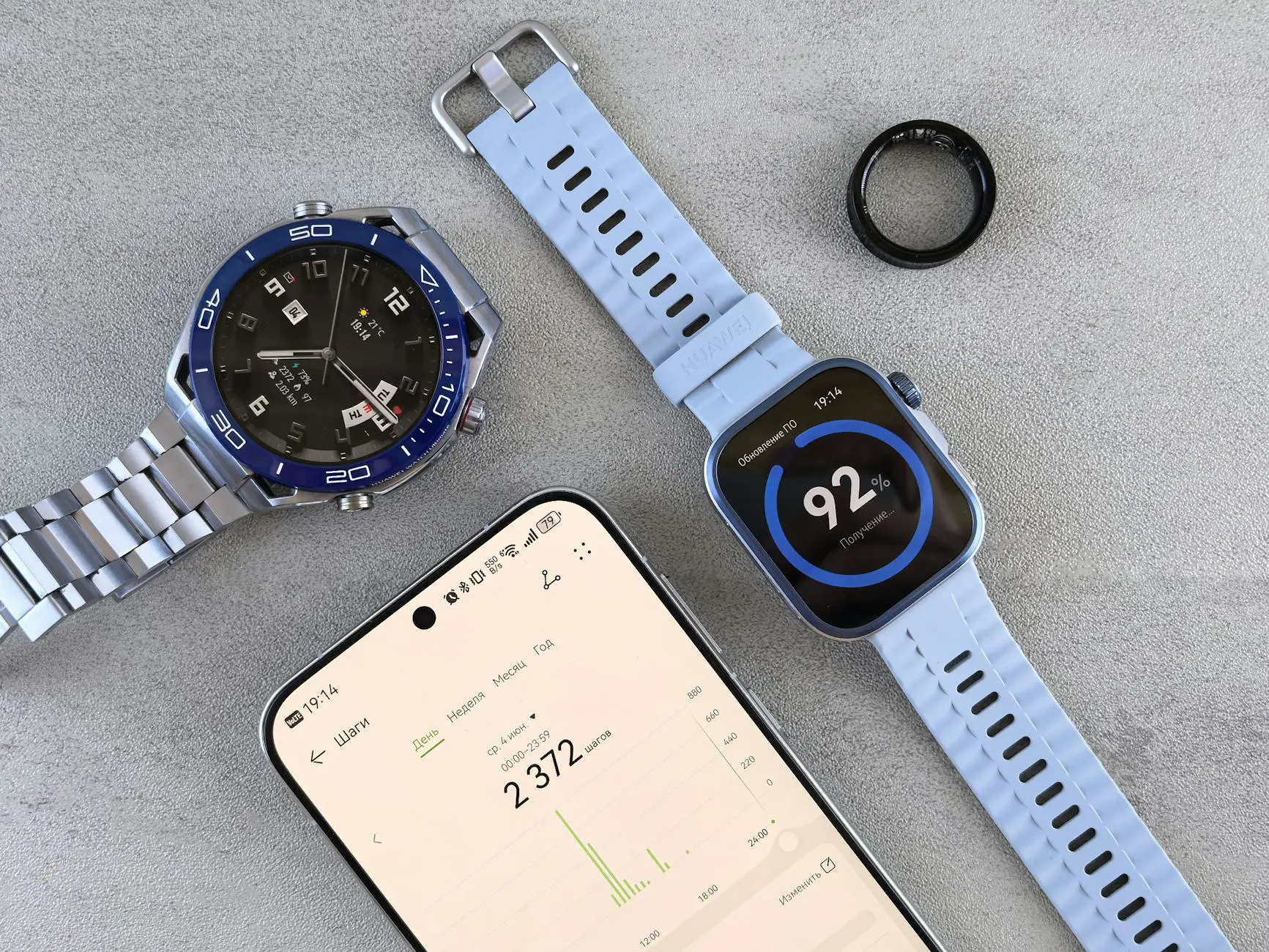
The AI Revolution in Health Monitoring
Health monitoring is no longer limited to hospital visits. The smartwatch on your wrist, the ring on your finger, or the phone in your pocket is now monitoring, analyzing, and alerting you to potential health risks around the clock, all thanks to artificial intelligence algorithms. This revolution is completely redefining personal health management.
As of 2026, over one billion people worldwide use wearable health technology. These devices have evolved far beyond simple step counters into AI-powered real-time health assistants. So how exactly do these technologies work, and which devices stand out from the crowd?
Wearable Devices and Their AI Capabilities
Apple Watch: The Pioneer of Health Monitoring
Apple Watch leads the way in setting standards for wearable health technology. Its AI-powered sensors deliver the following features:
- ECG Monitoring: Takes single-lead electrocardiograms to detect heart rhythm irregularities such as atrial fibrillation (AFib). Apple's AI algorithm has achieved over 98 percent accuracy in clinical studies.
- Blood Oxygen Measurement (SpO2): AI models monitor drops in blood oxygen levels to detect conditions like sleep apnea at an early stage.
- Fall Detection: Analyzes accelerometer and gyroscope data with AI to detect falls and automatically contacts emergency services when necessary.
- Wrist Temperature Monitoring: Measures wrist temperature throughout the night to provide insights about cycle tracking and overall health status.
Fitbit: Data-Driven Health Coaching
Fitbit, now under Google's umbrella, stands out in the industry for its AI-powered personalized health coaching. Fitbit's AI-driven features include:
- Daily Readiness Score: Analyzes sleep quality, activity levels, and heart rate variability (HRV) to assess how prepared you are for your day.
- Stress Management Score: Measures stress levels using an electrodermal activity (EDA) sensor and AI algorithms, then recommends personalized breathing exercises.
- Sleep Profile: Analyzes your monthly sleep data with AI, matching you to one of six animal categories to provide deep insights into your sleep habits.
- Irregular Rhythm Notifications: Evaluates potential AFib symptoms through passive heart rhythm monitoring with artificial intelligence.
Garmin: AI-Powered Performance for Athletes
Garmin offers AI-supported advanced health and performance tracking, particularly suited for active individuals and athletes:
- Body Battery: Combines heart rate variability, stress, activity, and sleep data using AI to score your energy level on a scale of 0 to 100.
- Training Readiness: AI algorithms analyze sleep, recovery, training load, and HRV data to help you optimize your training intensity.
- Race Predictor: Evaluates your past training data with AI to predict your finish times for 5K, 10K, half marathon, and marathon distances.
- Respiration Rate Monitoring: Tracks your breathing rate throughout the night to collect data on your respiratory health.
Oura Ring: A Health Lab on Your Finger
Oura Ring takes a different approach to wearable health technology with its ring-form design. It has been scientifically proven that measurements taken from the finger provide more accurate results than wrist-based measurements for certain metrics:
- Sleep Analysis: Classifies REM, deep sleep, and light sleep stages with AI, analyzing your sleep quality with near-clinical accuracy.
- Temperature Tracking: Detects body temperature changes as small as 0.1 degrees, enabling early detection of illness symptoms.
- HRV Analysis: Measures heart rate variability with high accuracy throughout the night to evaluate your stress and recovery status.
- Cycle Prediction: Analyzes temperature and physiological data with AI to predict menstrual cycles and fertility windows for women's health.
AI-Powered Health Applications
Sleep Tracking and Analysis
Artificial intelligence is delivering groundbreaking results in the field of sleep health. Modern sleep tracking apps have the following capabilities:
- Real-time classification of sleep stages
- Detection of snoring and sleep apnea symptoms through audio analysis
- Personalized sleep hygiene recommendations
- Optimal wake-up timing based on light sleep phases
- Early detection of chronic sleep disorders
According to research, individuals using AI-powered sleep tracking systems sleep an average of 45 minutes more quality sleep and report up to a 30 percent decrease in daytime fatigue.
Heart Health Monitoring
Cardiovascular disease remains the number one cause of death worldwide. AI-powered heart health monitoring holds enormous potential for early diagnosis and prevention in this area:
- Continuous Rhythm Monitoring: AI algorithms can detect abnormalities in your heart rhythm during daily activities and alert your doctor.
- Blood Pressure Estimation: Next-generation wearable devices can perform cuffless blood pressure measurements using pulse wave analysis and artificial intelligence.
- Heart Attack Risk Assessment: AI models combining HRV, activity levels, sleep quality, and stress data can predict cardiovascular event risk in advance.
According to a 2025 Stanford University study, AI-powered wearable devices can detect atrial fibrillation an average of six months before clinical symptoms appear. This early warning system has the potential to reduce stroke risk by up to 60 percent.
Nutrition and Metabolism Tracking
Artificial intelligence is also revolutionizing nutrition and metabolism management. Features offered by AI-powered nutrition apps include:
- Food recognition from photos and automatic calorie calculation
- Blood sugar response analysis through integration with continuous glucose monitors (CGM)
- Creation of personalized nutrition plans
- Prediction of nutrient deficiencies based on symptoms
- Metabolic health score calculation and improvement recommendations
Technologies Powering AI Health Monitoring
Machine Learning and Deep Learning
The AI engines in wearable devices use continuously evolving algorithms that learn from millions of users' data. These algorithms rely on several key approaches:
- Supervised Learning: Models trained with labeled clinical data are used to detect specific health conditions. For example, AFib detection from ECG data is performed using this method.
- Unsupervised Learning: Learns a user's normal behavioral patterns to detect deviations. Unexpected drops in activity or changes in sleep patterns are detected this way.
- Reinforcement Learning: Optimizes recommendations based on user feedback. Training plans and nutritional advice are personalized using this method.
- Transfer Learning: Adapting models trained on large datasets to individual users provides high accuracy even with limited data.
Edge Computing (Edge AI)
Modern wearable devices perform a significant portion of AI processing directly on the device itself. The advantages of this approach include:
- Real-time analysis and instant alerts
- Ability to function without an internet connection
- Protection of personal health data privacy
- Low energy consumption for extended battery life
Privacy and Security Concerns
AI-powered health monitoring also brings significant privacy questions. Health data is among the most sensitive personal data, and protecting this information is critically important:
- Data Storage: It is important to know where and how your health data is stored. Evaluate encrypted cloud storage and local storage options.
- Third-Party Sharing: Carefully review apps' data sharing policies. Know your rights under GDPR and similar regulations.
- Anonymization: Check whether data used for research purposes has been properly anonymized.
- Right to Deletion: Remember that you have the right to request the deletion of your data at any time.
The Future of Digital Health
AI-powered health monitoring continues to evolve rapidly. Developments expected in the near future include:
- Non-Invasive Glucose Monitoring: Needle-free continuous blood sugar tracking will revolutionize diabetes management.
- Blood Pressure Monitoring: Cuffless, continuous blood pressure measurement will become widespread.
- Mental Health Tracking: Early detection of depression and anxiety symptoms from voice tone, movement patterns, and physiological data will become possible.
- Genetic Integration: AI models combined with genetic data will deliver fully personalized health recommendations.
- Doctor-Patient Collaboration: Integration of wearable data with electronic health records will enable more effective treatment plans.
AI-powered health monitoring is transforming healthcare from reactive to proactive. Preventing diseases rather than treating them remains the core promise of digital health.
What to Consider When Choosing a Wearable
Key factors to consider when selecting the wearable device that best suits your needs:
- Your Health Priorities: Heart health, sleep quality, or fitness performance? Choose your device based on your priorities.
- Ecosystem Compatibility: Compatibility with your smartphone and other devices is important.
- Sensor Quality: Prefer devices with FDA or CE-approved health sensors.
- Battery Life: Long battery life is a critical factor for continuous health monitoring.
- Data Privacy: Review the manufacturer's data protection policies.
- Scope of AI Features: Evaluate devices that offer personalized insights and recommendations powered by artificial intelligence.
Conclusion: Your Health on Your Wrist
AI-powered wearable devices and health apps have ushered in a new era of personal health management. From Apple Watch's ECG capabilities to Oura Ring's precise sleep analysis, from Fitbit's stress management to Garmin's performance optimization, the wide range of AI capabilities enables millions of people to manage their health more consciously.
The important point to remember is that these devices do not replace professional medical diagnosis and treatment. However, as early warning systems and tools that strengthen doctor-patient collaboration, AI-powered health monitoring will continue to be one of the cornerstones of future healthcare.
Take a step today to start monitoring your health with artificial intelligence. Choose a wearable device that fits your needs and become part of the digital health revolution. Do not hesitate to reach out to us with your questions or experiences.


